Anniversary (2025) | Review
In Komasa’s America, the spangled stars move to the center and everything else falls apart.


In Anniversary, Oscar-nominated Polish director Jan Komasa abandons the social neuroses of modern Poland to diagnose America’s. It’s an ambitious pivot and a precarious one. Entering the genre of American political dystopia as someone who has never lived inside the country’s contradictions makes the attempt to “intuitively” dismantle the world’s oldest democracy feel, from the outset, like wishful thinking.
Conceived during the pandemic and co-written with debut American screenwriter Lori Rosene-Gambino, Anniversary lands in 2025 with an unfortunate synchronicity: real-world U.S. political unrest has outpaced the film’s imagined anxieties. The story follows Ellen and Paul Taylor (Diane Lane and Kyle Chandler), a comfortably liberal Washington D.C. power couple, she a Georgetown political theorist, he a chef beloved by the capital’s elite, whose marriage anniversaries anchor five years of escalating unease. Their children orbit the narrative mostly as set dressing; the real catalyst arrives via Josh (Dylan O’Brien), the one floundering offspring, and Elizabeth (Phoebe Dynevor), his newest girlfriend.
Elizabeth is more than a rebound. She’s a former student of Ellen’s, a disciple-turned-antagonist who once wrote a thesis so steeped in radical rhetoric that Ellen quietly shoved her out of academia. Elizabeth resurrects that thesis as a book, the cover emblazoned with a distorted American flag whose stars have migrated to the center. It becomes a phenomenon. A movement. A template for national rebirth in all the wrong ways.
Komasa frames this ideological creep across the backdrop of family rituals: anniversaries, birthdays, the obligatory Thanksgiving. This domesticity only highlights how schematic the film’s psychology is. The “vengeful daughter-in-law” trope, deployed here without subversion, feels imported from prestige soap operas rather than a filmmaker known for Corpus Christi and Suicide Room. As Elizabeth’s influence metastasizes, the Taylors unravel in utterly predictable beats.
Stylistically, the film could pass for a lost episode of The Handmaid’s Tale: the desaturated blues and greys, the cool undertone, the architecture of dread. Story-wise, it borrows the structure and emotional register of Russell T Davies’ Years and Years, Mike Flanagan’s The Fall of the House of Usher, and Scott Z. Burns’ Extrapolations. These comparisons would be flattering if Anniversary pushed the genre forward. It doesn’t. It merely echoes.
The writing commits to a reductionist view of its characters: mothers must choose between children and intellectual responsibility; fathers are rendered as timid, malleable vessels eager for ideological grooming. Komasa and Rosene-Gambino gesture at the idea that creation—of children, of ideas, of movements—is inherently derivative and uncontrollable. You can raise a monster without ever being one; restraining that monster once it grows teeth is the real fiction. Dante had thoughts about good intentions paving certain roads; Anniversary never finds the courage to follow that road to its end.
The film also inherits the studied neutrality of Alex Garland’s Civil War, refusing to identify its radical movement with either real-world American political extreme. But where Garland’s ambiguity felt pointed, here it reads like evasion. The Taylors are clearly affluent liberals; the film’s refusal to name the ideology threatening them feels like creative cowardice rather than narrative strategy.
In the end, Komasa’s characters, and Komasa himself, fall on their own swords. A film ostensibly about the dangers of derivative creation becomes, regrettably, an example of it. The irony writes itself.
Anniversary premiered as the opening film of the 41st Warsaw International Film Festival on October 11, 2025, and was released theatrically in the U.S. by Lionsgate on October 29.
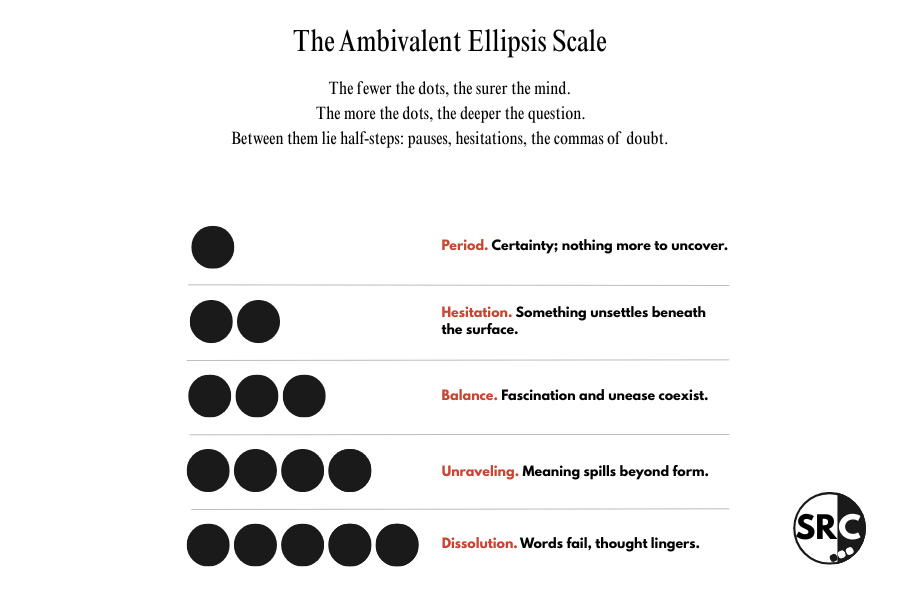
Rating: ⚫ ⚫