Dog-Dog (2025) | Review
Marco Berger pushes the boundaries of absurdist cinema in this quasi-queerbaiting dark comedy.

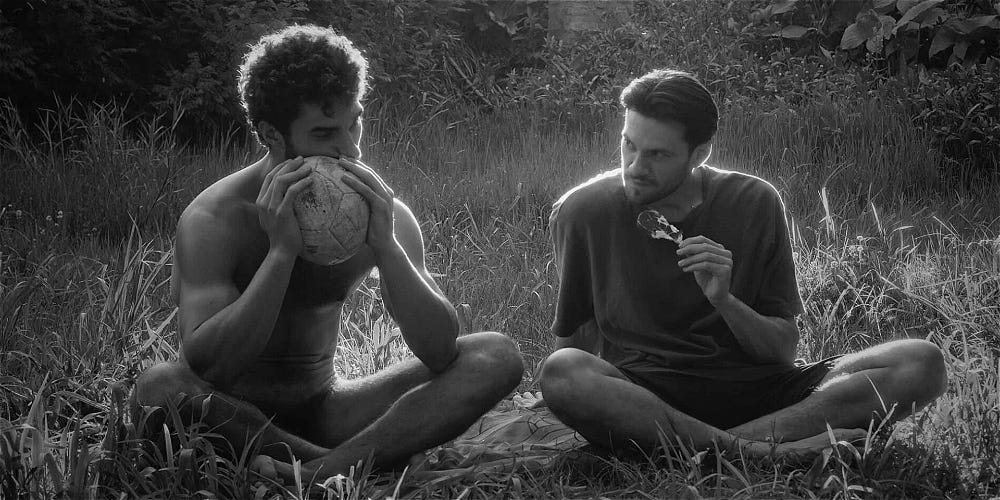
It only takes a glance at Marco Berger’s filmography to deduce that queer themes, primarily those centered around gay men, abound in his films. However, passing Dog-Dog as anything remotely gay-themed is a bit of a stretch, which didn’t hinder it from screening at three LGBTQ festivals. During a vacation in rural Argentina, two heterosexual couples encounter nude men behaving like dogs, whom they treat as such, with a disquieting naturalness. Juan, one of the cabin dwellers, forms a bond with a dog-man, feeds, bathes, and even names him, against his girlfriend’s counsel. With their stay at the cabin nearing the end, Juan lobbies his girlfriend to adopt Max and take him with them to Buenos Aires.
The absurdist concept of the film can lead one to speculate about its diegetic anchor. Is this a film about a muted dystopian future where some humans grow up feral and live dog-like lives or is the narrative set in a parallel universe where things simply are the way they have been since time immemorial? In either case, seeing certain men and women be at a visible advantage over others, while whistling at the latter and calling to them with phrases such as “come here boy,” or “do you have an owner” will be a bitter pill to swallow for many viewers, considering that our history has seen people treated this way through corrosive systems of colonialism and slavery.
Similarly, one can argue that the film holds a mirror to the notion and ethics of pet ownership and certain practices humans have normalized when it comes to our furry companions. At several points in the film Juan kisses his naked anatomical equal, on the mouth, tongue and all, which, while visually homoerotic is contextually castrated by an unequivocal boundary that anything more is considered an act of reprehensible abuse. As such, any inkling that this film might be exploring the master-submissive dynamic represented in gay culture is nipped at the bud.
Perhaps the single line that encompasses the Argentine director’s 11th feature film comes as the protagonist tells a childhood story of when he traveled to Norway to visit his grandfather, who took him to a remote, snow-covered field at night, during a full moon that was so bright, its reflection against the snow lit up the entire valley, like floodlights of a stadium. Juan describes it as beautiful, but distressing to the mind. Perhaps that is the way to receive this film, oozing with tenderness and some kind of love between the two visually interchangeable equals, who are anything but given the film’s odd social hierarchies and penchant for pseudospecies.
Reviewed on October 11, 2025 when it was screened in the Free Spirit section of the 41st Warsaw International Film Festival.
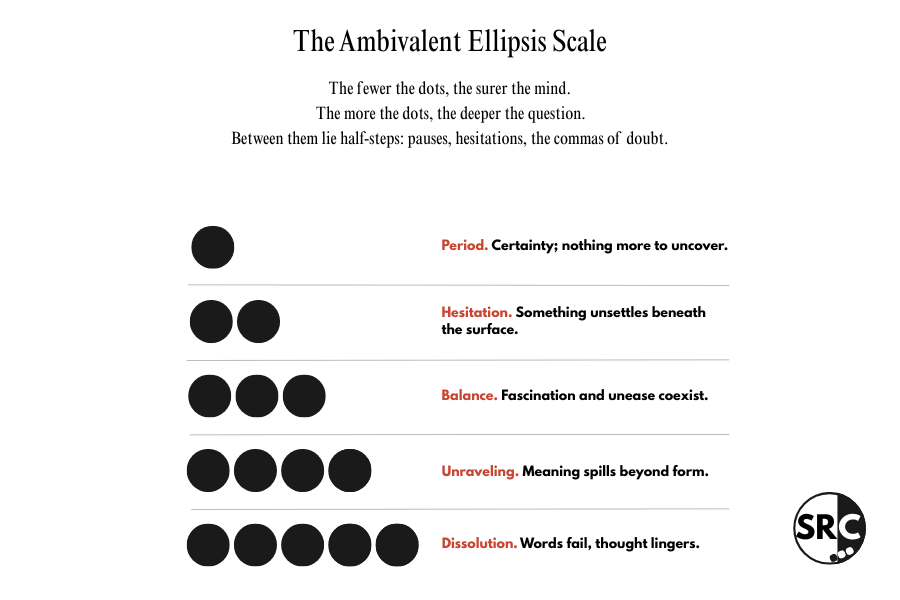
Rating: ⚫ ⚫ ⚫ ⚫ 1/2