Yes (2025) | Review
A one-way trip from flat Earth to the Moon; an Israeli film few Israelis will want to see.

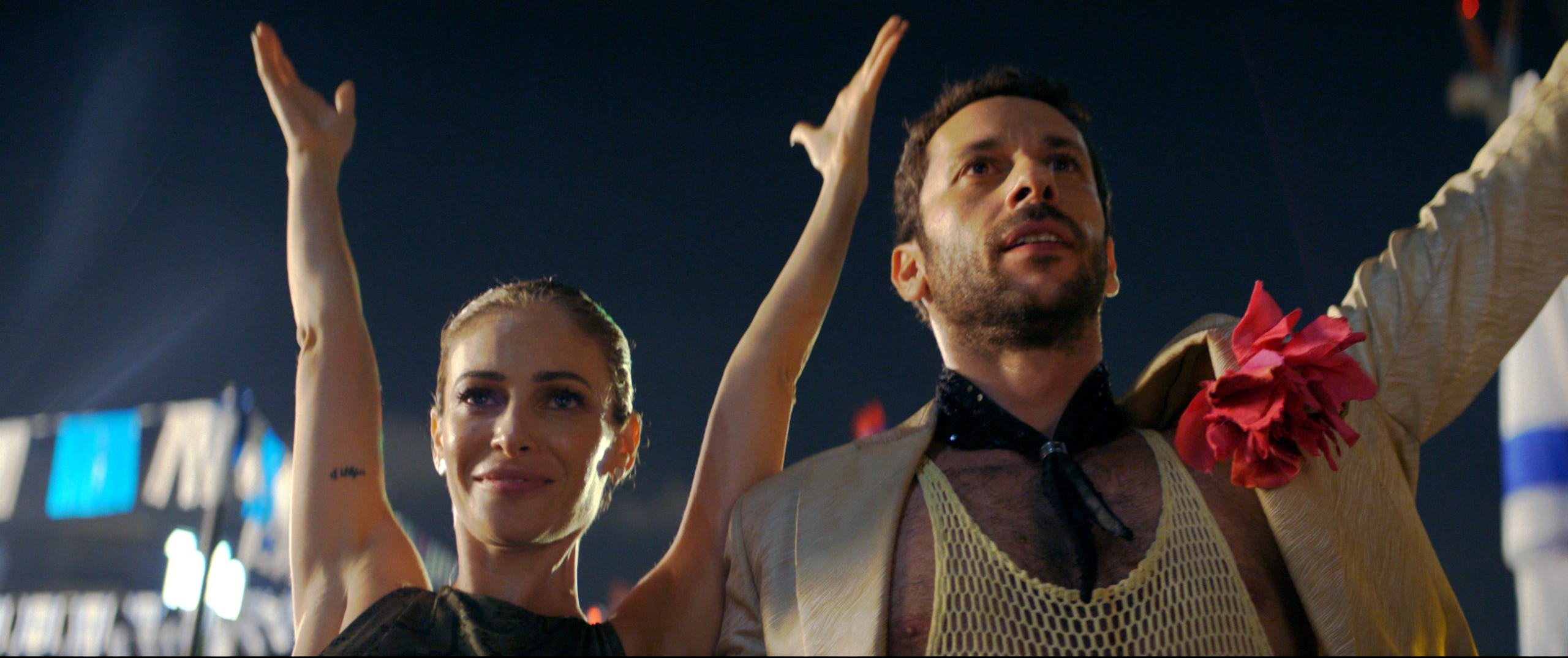
In an interview with the Deadline’s Damon Wise last month, talking about his identity of an artist from a small country, Lapid compared “being an Israeli filmmaker was like being, maybe, a Bosnian filmmaker.” Let’s remember that he talks about the same Bosnia that 30 years later is still reeling from a genocide, the only on the European continent since the Holocaust, of its Muslim-majority population. I can’t help but find his comparison in poor taste.
Then again, both the Western Balkans country and that between the Mediterranean Sea and the Jordan River were once territories on the opposite extremes of the Ottoman Empire, under its control for almost 4 centuries (1516-1878). It’s not a surprise that Bosnia’s capital, Sarajevo, is sometimes referred to as the Jerusalem of Europe.
But back to Yes that David Ehrlich dubbed The Zone of Interest without the garden wall. One thing that made the British film gut-wrenching was the mundanity of evil marked by its proximity to unfathomable, yet nothing but eerily faint, aural suffering. Less than a century later, the evil is still mundane and in proximity, even greater so in light of its repetition and willful historical amnesia.
However, dissonance and distraction are the name of the game, upending all we knew and expected evil to be. Whereas the dystopian futures imagined through the works of art ascribed refinement and sophistication to their villains, our dystopian present and Lapid’s satirical Yes burden us with clowns and demagogues who live and breathe kitsch, leaving most people unable to grasp the dangers of their evil.
The crux of Yes is that everyone is a couple of yeses from capitulating to the worst of humanity. If you find that hard to comprehend, just remember that it only takes folding [a paper] 42 times to get from the Earth to the Moon.
I am not certain that this will be a wake-up call for many Israelis. Yes was made for people already aghast by Israel’s asymmetrical response to the October 7 attack. I can imagine that many audience members felt uneasy when, at the opening credits of the film, they saw that it was made with support from Israel Film Fund (a public fund supported by the Israeli Ministry of Culture). Any money that the government of Israel spends towards anything but the killing, starving, and oppressing of the Palestinian people is money well spent, even if they’re doing it to maintain the already crumbling facade of democracy.
Whereas James Joyce ends his masterpiece Ulysses with “Yes I said yes I will Yes" affirming life, love, and acceptance in light of the day’s hardships; Nadav Lapid shows us how that same Yes can affirm compromises and moral deterioration in light of an indiscriminate massacre.
Review published on Letterboxd on August 21, 2025 when it was screened in the Kinoscope section of the 31st Sarajevo Film Festival.
Rating: ⚫ ⚫ ⚫ ⚫