Obsession (2025) | Review
A promising exercise in atmosphere that struggles to justify its extraordinary praise.


Any claim of a new horror prodigy must inevitably stand comparison with the successes of recent memory. That increasingly crowded field stretches from the early work of Ari Aster, through Hereditary and Midsommar, to more classically Hollywood efforts like A Quiet Place. It is against that backdrop that Curry Barker’s Obsession arrives carrying the weight of extraordinary praise, much of it intertwined with the story of its creator, a YouTuber who managed to bypass the traditional gatekeepers of the industry. Since premiering at TIFF (Toronto International Film Festival) in September 2025, the praise surrounding Obsession has had nearly nine months to ferment into something approaching mythology before the film’s commercial release. There is something undeniably impressive about a filmmaker nine months younger than me securing a theatrical release in an era where many of our peers seem locked out of the profession unless born into it. Yet the achievement of making a film and the achievement of making one of the best horror films in recent memory are not the same thing.
The premise is simple. Baron, known as Bear (Michael Johnston), harbors feelings for Nikki (Inde Navarrette) that appear largely unrequited. After acquiring a “one wish willow”, a twig that grants a wish when snapped, he makes a decision he quickly comes to regret. The mechanics of the supernatural device bear a striking resemblance to the occult logic found in Zach Cregger’s Weapons, where the snapping of a twig similarly bends reality to human desire. The comparison is difficult to ignore, though Barker proves capable of generating tension through means that are distinctly his own.
Indeed, the strongest aspect of Obsession is Barker’s command of atmosphere. Light and shadow are manipulated with confidence, imbuing ordinary spaces with a creeping sense of dread. The film repeatedly demonstrates a promising visual intelligence, finding unsettling possibilities in corners, hallways, and darkness rather than relying exclusively on loud shocks, though Barker is hardly shy about traditional jump scares. It is easy to understand why he has attracted attention. The talent is evident.
The problems emerge once the premise begins unfolding. Nikki increasingly ceases to exist as a person and instead becomes a manifestation of Bear’s wish. The film pushes this idea to disturbing extremes. When Bear leaves for work, Nikki remains rooted to the exact spot where he left her, unable to function in his absence. She stands there for hours and eventually days, urinating and defecating on herself as her obsession consumes every trace of independent thought. Navarrette commits fully to the role and sells the horror of the situation, but the film’s treatment of her character raises uncomfortable questions. Whether Barker intends this as a critique of possessiveness or merely as a vehicle for body horror is ultimately beside the point. The question is whether the resulting image offers any insight commensurate with the degree to which Nikki is reduced to an object through which Bear’s desires and regrets are explored. I am not convinced that it does.
Another curious detail emerges in the film’s depiction of adolescence. College looms over the story as a source of anxiety, with Sarah (Megan Lawless), a friend of the couple, receiving rejection after rejection through paper letters. It is a small point, but a revealing one. For a film so immersed in the sensibilities of Gen Z, it occasionally feels oddly detached from the realities of that generation. Most contemporary applicants experience the emotional rollercoaster of admissions through online portals, email notifications, and digital dashboards rather than envelopes arriving in the mail. The choice may seem insignificant, yet it contributes to a broader sense that Obsession is often more interested in an idea of youth than in the texture of young people’s actual lives.
What follows remains faithful to the conventions of its genre. Bear attempts to undo forces that have escaped his control, discovering that the rules governing the universe are far easier to invoke than to reverse. Barker stages these developments with technical assurance, and there are moments where the film’s craft carries it forward even when the story threatens to stall. Yet for all its competence, Obsession rarely feels as though it is challenging the audience’s assumptions or probing anything particularly uncomfortable beneath its premise.
Part of the enthusiasm surrounding the film appears rooted in what it represents. Coming as another even younger YouTube creator, Kane Parsons, makes the leap to theatrical filmmaking with Backrooms, Obsession has been folded into a broader narrative about internet creators reshaping cinema. That narrative is undeniably compelling. The film itself is less so. Neither work seems especially interested in confronting the collective anxieties of the present moment. Instead, they package those anxieties into accessible, respectable genre entertainment.
In the end, what lingers most is not the film’s central relationship but the comparison it invites. Where Weapons transformed a snapped twig into an unsettling symbol of power and control, Obsession reduces a similar supernatural conceit to the frustrations of a lovesick young man. Aunt Gladys snapping twigs and bending people to her will proved far more memorable than another straight Gen Z protagonist pining after a girl. The mythology surrounding Barker’s rise may well be justified. After all, the talent is evident. The mythology surrounding Obsession, however, appears to have grown far faster than the film itself.
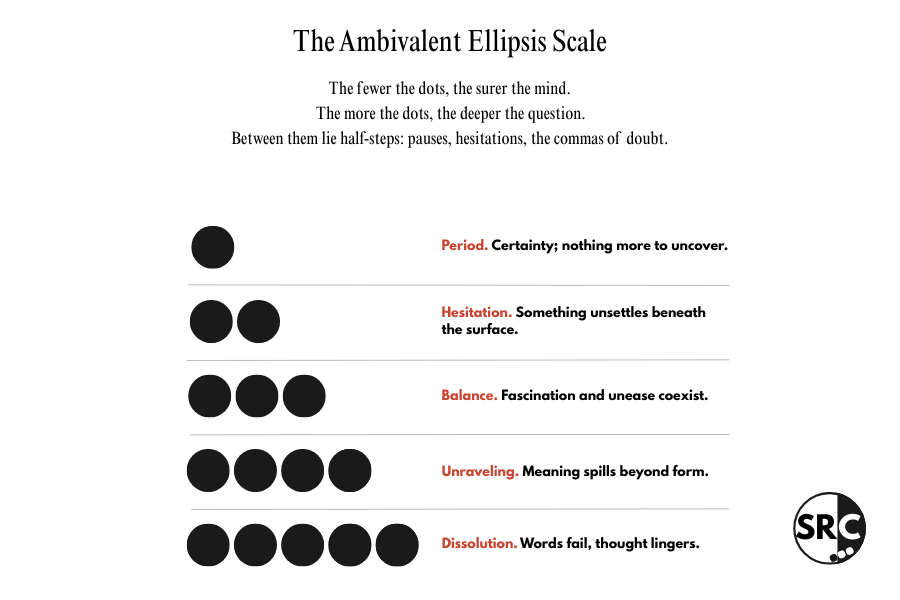
Rating: ⚫ ⚫