The Drama (2026) | Review
A caustic portrait of moral gerrymandering and curated millennial selfhood.

Editor’s note: This review originally referred to the setting as New York, while The Drama is in fact set in Boston. The correction does not alter the central argument of the piece, which concerns the feature’s portrayal of upper-middle-class liberal aesthetics, selective morality and urban class performance.
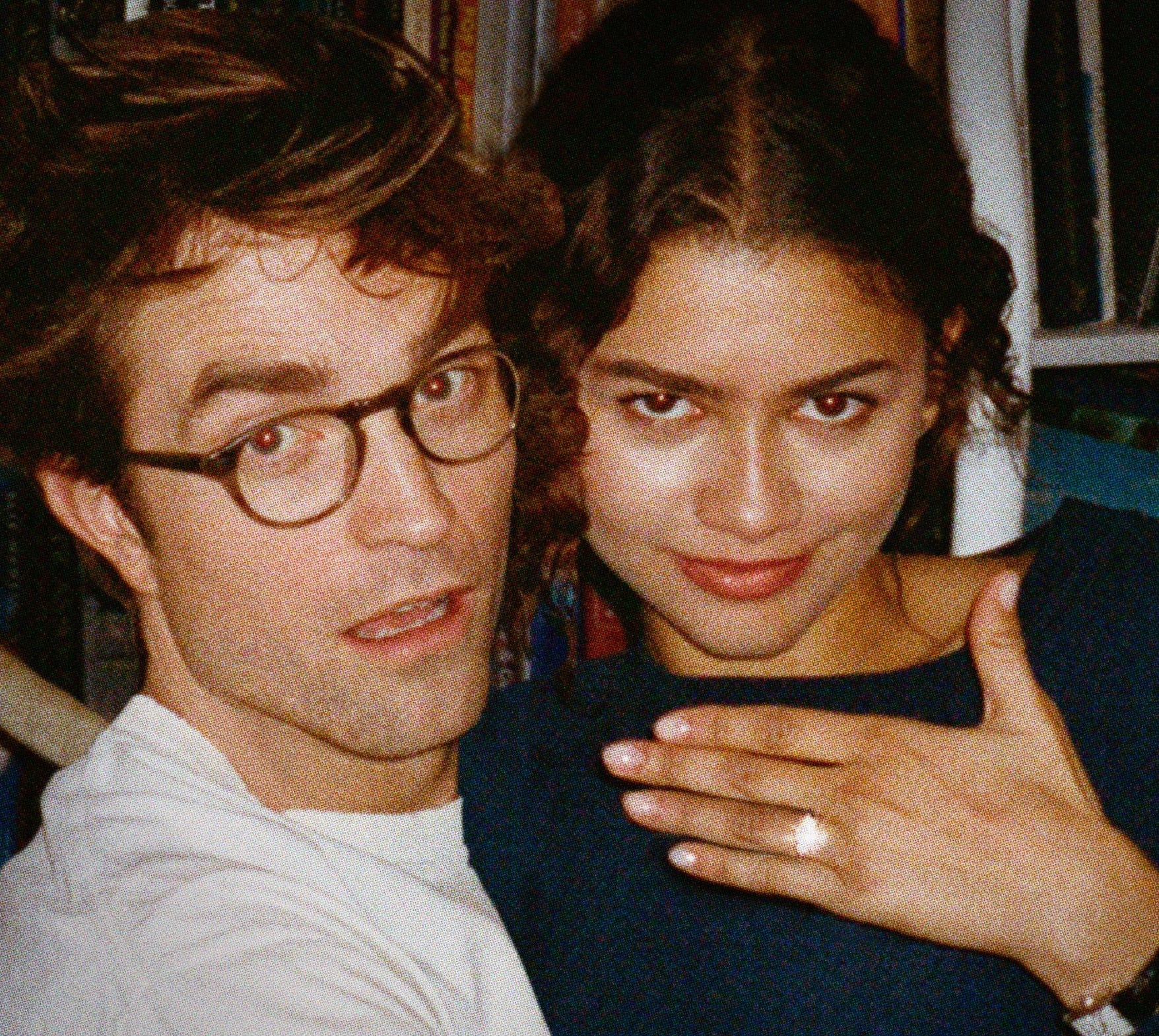
With The Drama, Norwegian director Kristoffer Borgli makes his second American feature after two films in his native country, and once again turns social discomfort into both method and spectacle. The setup is elegantly cruel. A week before their wedding, Boston couple Emma (Zendaya) and Charlie (Robert Pattinson) sit down for what should be a celebratory tasting dinner with their closest friends Mike (Mamoudou Athie) and Rachel (Alana Haim), who are serving as best man and maid of honor. What begins as loose conversation and drunken oversharing hardens into a game of “what is the worst thing you have ever done?” The answers are ugly enough already. One involves using a girlfriend as a human shield against a rabid dog, another locking a neighbor’s child in an abandoned RV, another cyberbullying a classmate. Then Emma’s turn comes, and the room freezes.
Her confession concerns not an act carried out but a contemplated one, and it is here that The Drama locates its nastiest insight. The previous admissions, all concrete and cruel in their own ways, suddenly begin to recede before the specter of something unrealized. What matters is not harm in any stable ethical sense, but what kind of harm is most legible within the moral vocabulary of this particular American milieu. The result is a study in moral gerrymandering, in how actual wrongdoing can be relativized while a hypothetical deed, once it touches the right taboo nerve, assumes a greater symbolic charge than what has already been done.
That is where things are sharpest. Emma’s friends do not assess wrongdoing through any coherent framework so much as through the codes of a culture that has trained itself to confuse moral seriousness with correct rhetoric. Potential evil, once sufficiently politicized, begins to outweigh actual cruelty. What emerges is a portrait of urban thirtysomethings who seem less interested in reckoning with their deeds than in classifying them according to approved hierarchies of outrage. One of the cleverer recognitions here is that for this social class, ethics has become inseparable from language, and language inseparable from performance.
Charlie, a British museum curator working for the fictional Cambridge Art Museum in Boston, is especially rattled by his fiancé’s confession, and the fallout that follows is both comic and poisonous. Yet the film is not only interested in moral panic. It is equally invested in the aesthetics of their world, and in the way taste functions as both insulation and alibi. Emma wears a faded Harper’s Magazine T-shirt. Their apartment, all curated surfaces and studied restraint, looks assembled out of aspiration itself. There are Cesca chairs, dance lessons, floral consultations, menu tastings, photographer meetings and a DJ they want to fire for “smoking heroin” in the street, a line that says more about their class instincts than any monologue could. Even the intellectual life of these characters feels aestheticized. When Emma is shown reading The Damage by Harper Ellison, both fictional, the gesture lands less as evidence of thought than as another accessory in the costume of being the right kind of person.
The Drama is very good at catching such details. These are people whose lives are expensive in ways never named directly, whose jobs belong to that loose category of coastal knowledge work where one is permanently adjacent to culture, money and self-regard without ever having to explain where any of it comes from. Weddings are expensive everywhere, but here every expense is intensified by the logic of a city where everything must also be artisanal, tasteful and socially legible. In that sense, a great deal is understood about how this class performs itself.
The limitation is that observation is not the same as fluency. Borgli proves himself an astute observer of American neurosis, from NPR-shaped moral reflexes to carefully curated urban selfhood, yet he never fully fuses those perceptions into an organic whole. Too often, The Drama feels like an outsider’s very intelligent dossier on a social type rather than a work that has truly entered and inhabited that type from within. The signals are precise, the satirical targets clear, but the connective tissue remains thin. Rather than thickening into fully persuasive drama, everything often stays at the level of an extended and very clever thought experiment.
That thinness becomes more noticeable as the narrative escalates. Rachel, in particular, emerges as a telling figure in the way she manages to become affected by Emma’s confession through someone else’s trauma, effectively claiming proximity to injury by proxy. It is a mordant sketch of an American impulse to narrate every disturbance back toward the self. Yet sketches are what much of this drama boils down to. The satire lands, often brutally, but the characters never quite gather the density that would turn them from carriers of an argument into fully persuasive people.
Even so, the final movement leaves behind a bitter aftertaste that is earned. By the time the wedding itself gives way to disaster and the dust begins to settle, what emerges is not trust, forgiveness or any serious shared reckoning, but something colder and more contemporary. The wedding may have imploded, but the logic of investment remains. Too much has already been poured into the relationship, into the shared life, into the image of themselves as a couple, for either of them to truly walk away. If there is a final diagnosis of its generation, it is this: everything is commodity, everything is investment, everything is aesthetics. So long as the façade can be preserved, almost anything can be absorbed.
At its best, The Drama is viciously funny and genuinely perceptive about the moral choreography of a certain American metropolitan class. It sees how taste, politics and selfhood have collapsed into one another, and how even confession can become another performance of identity. What it does not quite manage is to turn that diagnosis into a fully cohesive whole. Sharp, brittle and often acerbically entertaining, it remains more impressive as social autopsy than as drama. Coming after Past Lives and alongside something like Materialists, it also suggests an A24 strain that has grown increasingly enamored of metropolitan class aesthetics while yielding diminishing returns. What once felt observant now risks hardening into brand habit.
Rating: ⚫ ⚫