

Tired aristocrats of arthouse cinema defined the 79th Cannes Film Festival
With Hollywood largely absent, Cannes 2026 leaned on familiar auteurs whose reputations proved stronger than their films.

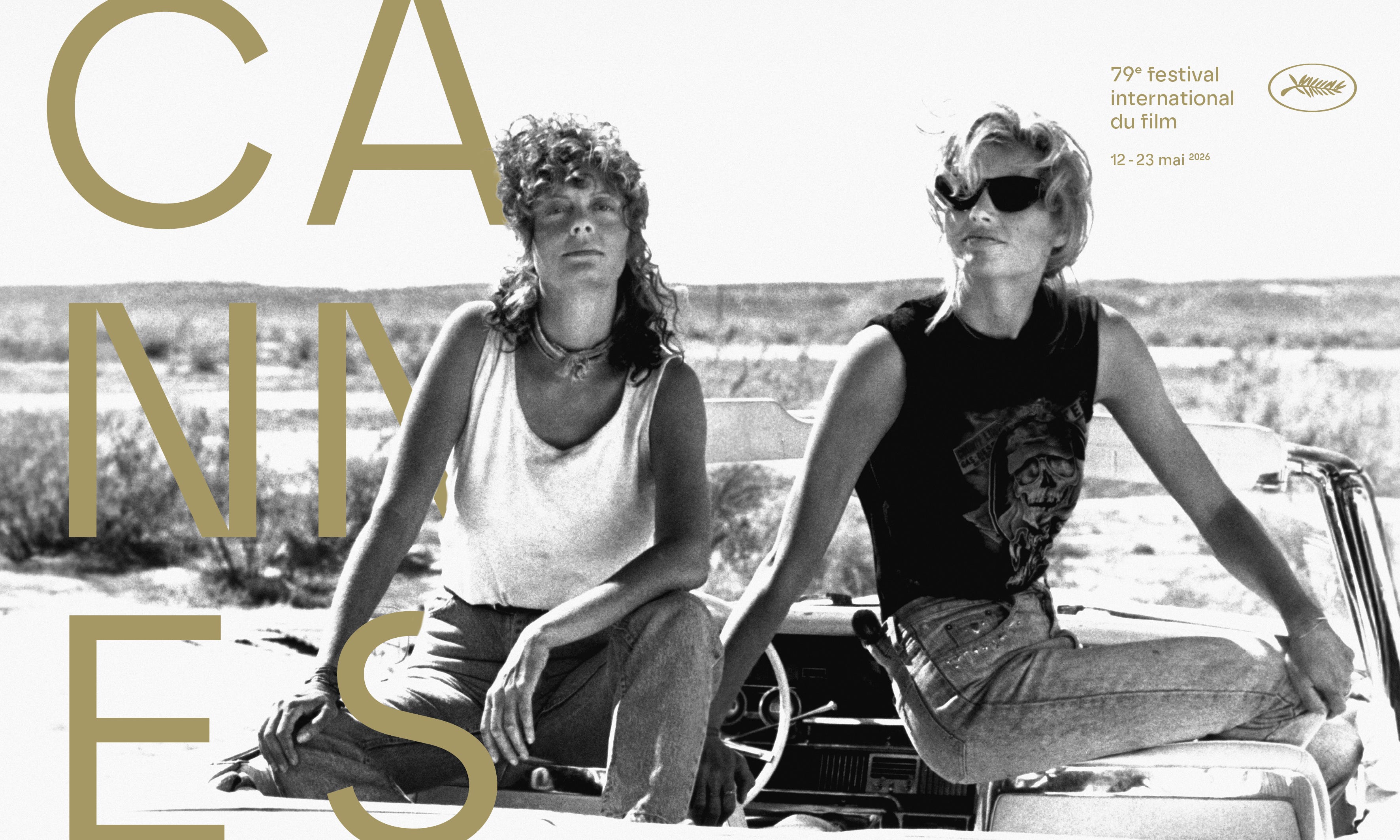
It is a fact that every edition of the Cannes Film Festival is remembered in its own way. This year’s edition will stand out not because of a particular film or the discovery of a brilliant debut director, but because of what Cannes lacked: films from the major American studios. Perhaps this is a useful reminder that Hollywood is not the birthplace of the seventh art and that, as we learned in elementary school, “in the house of the Lumière brothers [in Paris] there was [the first] film premiere” and that “in that distant ’95, art received its seventh child,” meaning 1895.
Presenting the festival’s selection in April, Thierry Frémaux, its director and leading figure, concluded by stressing that “when [American] studios are less present at Cannes, then they are simply less present, full stop.” Yet while Frémaux may be able to tolerate the absence of American studios, the same cannot be said of America itself and its filmmakers. And so Paper Tiger by James Gray and The Man I Love by Ira Sachs, films that will at best leave viewers indifferent and then drown themselves in the monotony of Netflix recommendations, found their way into the main Competition.
With Hollywood in a crisis approaching the scale of the Great Recession, and with the imminent merger of two major studios, Warner Brothers and Paramount, the decisions of Los Angeles executives are increasingly shaped by the astronomical costs of a Cannes premiere and the unsatisfactory return on such investments. Film critics on the French Riviera have in the past been able to pass judgment on a film months before its theatrical release and seriously damage its box office prospects. Studios are therefore relying more and more on their own marketing campaigns and world premieres where they can impose review embargoes on critics, at least during a film’s first week of release.
The geographical monotony of the main Competition was also striking. Western Europe, the United States, and East Asia held a monopoly at the expense of Africa and South America, two of the world’s historically richest and most diverse continents. It is clear that Frémaux is one of the kingmakers of world cinema, part of a guard that gives priority in the main Competition precisely to those who return to Cannes every few years: the festival darlings. And it is impossible not to notice that these legends arrived on the Croisette in 2026 with, at best, mediocre and forgettable films, from Mungiu’s Fjord, winner of the Palme d’Or, to Zvyagintsev’s Minotaur, winner of the Grand Prix, and Hamaguchi’s All of a Sudden. Those who appeared in the Cannes lineup for the first time, though not with debut films, generally managed to do so thanks to the subsidies and quotas Cannes unofficially preserves for nurturing French cinema.
In the past, the Cannes main Competition gave opportunities to first features and launched the careers of Mati Diop, Jane Campion, Steven Soderbergh and others. The last of these is not the best example, since he returned this year with a documentary about John Lennon in which he controversially used artificial intelligence. But Cannes is merely keeping pace with a broader 21st-century trend. While the previous century saw major cinematic achievements from the young, such as Orson Welles, who directed and co-wrote Citizen Kane at 25, and Jean-Luc Godard, whose Breathless was made when he was 29, this century more and more often endures films by the middle-aged and those in the late stages of creative life. These are undeniably accomplished greats, but also auteurs who appear tired, both in life and in creativity, as well as those who started young and now have nothing left to say without repeating themselves. Partly because of comfortable Western lives and freedoms, partly because of fame.
On the other hand, Hollywood places young YouTubers in directors’ chairs, proving that having an idea and realizing it cinematically are not necessarily abilities that go hand in hand.
Even the festival’s parallel sections, those historically born out of protest against the official selections and whose purpose is to provide a platform for new voices, recognized the already recognized this year. In Critics’ Week, director Sara Ishaq appeared with The Station. Ishaq was nominated for an Oscar in 2014 for her short film Karama Has No Walls. Also present was Kosovar director Blerta Basholli with Dua, after her first feature Hive swept almost all the major awards at the Sundance Film Festival in 2021. In Directors’ Fortnight, Reed Van Dyk, Oscar winner for the short film DeKalb Elementary, appeared with his first feature, Atonement.
A ray of hope remained in Un Certain Regard, a section known for unconventional and unusual styles of filmmaking. It was also the most geographically diverse program, ranging from the first Chilean film at Cannes, The Meltdown, to the only Palestinian film, Yesterday the Eye Didn’t Sleep. Incidentally, this was also the section in which this critic saw the fewest films, four out of a total of 19.
And just like that 79th Cannes Film Festival is over. Next year it enters its eighth decade, and the question now is how long a cinematic empire can continue to live off its own aura. Cannes will most likely reach its centenary, but whether it will celebrate it with the same prestige it currently enjoys is another story entirely.